
A conversation with Dr Paul Taylor on hardiness, training for stress and why comfort can quietly age us.
If you’ve ever felt like life gets “harder” as you get older—more responsibilities, more uncertainty, more pressure—you’re not imagining it. But here’s the twist: stress isn’t automatically the enemy of healthy ageing. In fact, when you understand it and train for it, stress can become a powerful driver of resilience, purpose, and longevity.
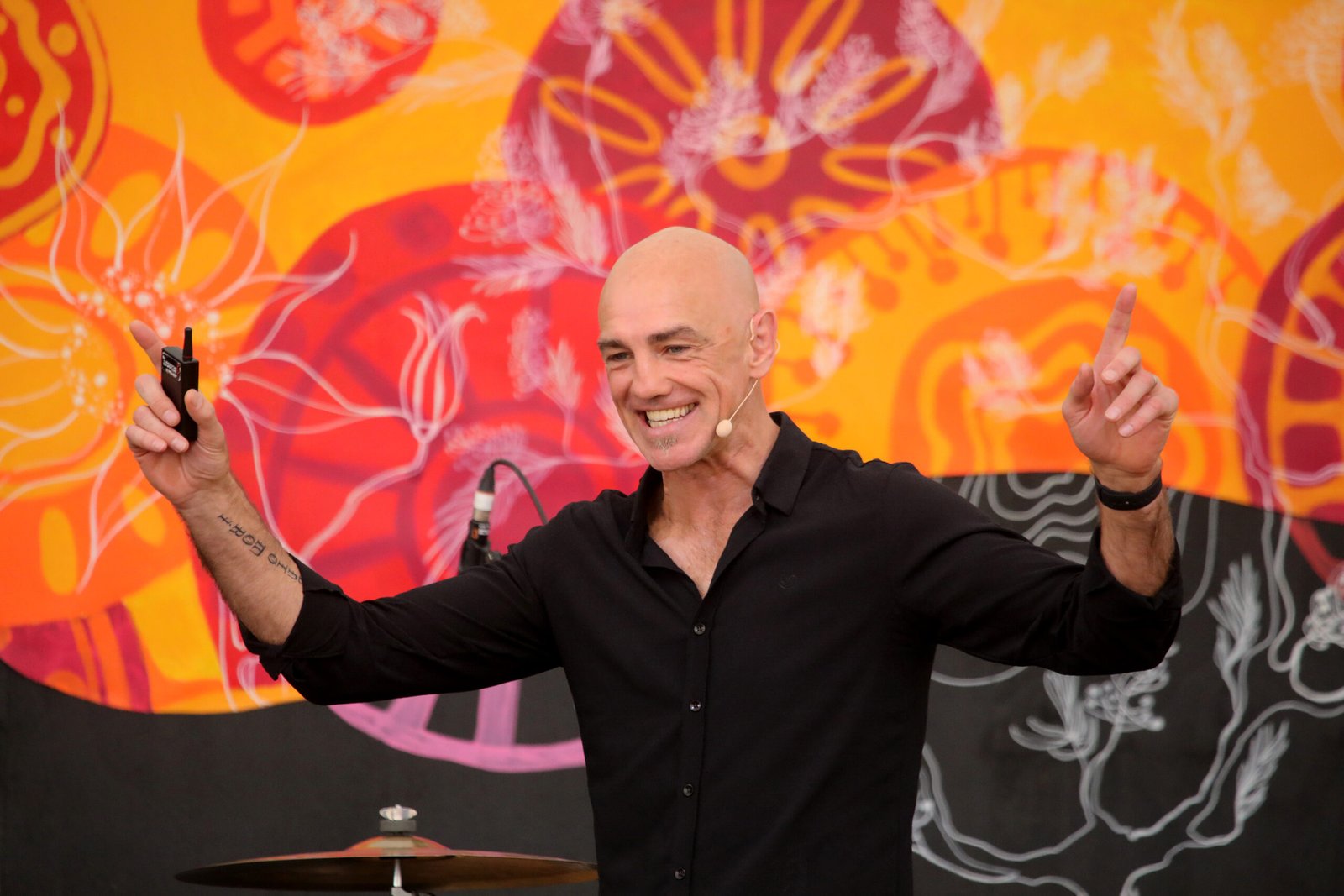
In this episode of the Healthy Ageing Institute Podcast, Ken Baldwin sits down with Dr Paul Taylor—researcher, educator, former British Navy aircrew and author of Death by Comfort and The Hardiness Effect—to explore why stress, handled well, can actually help you age better.
The military mindset: stress is unavoidable—so you train for it
One of the biggest takeaways from Paul’s military experience is simple:
The military doesn’t pretend stress can be avoided. They assume it’s coming—and they train you for it.
Paul describes “stress inoculation training” as a progressive exposure model: you gradually increase complexity and pressure so your capacity expands over time. It’s the same principle as strength training—you don’t gain capability by avoiding load; you gain it through smart, progressive load with recovery.
And that’s the point most people miss. Stress isn’t only something to eliminate. It’s something you can adapt to—provided you have the right structure and recovery.
Why debriefing is a missing skill in everyday life
In aviation and military operations, debriefing isn’t optional. Every mission gets reviewed.
Paul highlights a key idea:
Learning from your own mistakes can be too late—so you learn from the mistakes of others.
That mindset has massive relevance outside the military. In business, health and even parenting, many people only talk about what went well. Rarely do we ask:
- What nearly went wrong?
- What did we miss?
- What would we do differently next time?
If you want to build emotional resilience and better decision-making as you age, debriefing is a practical habit that trains awareness, humility, and growth.
A turning point: mortality, meaning and a new direction
Paul shares a deeply personal moment from his military career: losing close friends in a helicopter crash. It shaped his decision to leave the forces—and crystallised his future direction.
From there, his path evolved from sports science and nutrition into something many health professionals eventually discover:
It’s not just about information. It’s about behaviour change.
That led Paul into neuroscience, education and eventually corporate performance—where mindset, stress physiology, recovery and human habits collide in real time.
Why comfort can age you faster than stress
Paul’s book Death by Comfort explores the mismatch between our biology and modern life.
In simple terms: our bodies evolved to function best with natural “inputs” like movement, real food, sunlight, challenge, meaningful effort, and connection. But modern life offers the opposite on tap:
- minimal movement
- ultra-processed food everywhere
- disrupted circadian rhythms (screens, artificial light, late-night stimulation)
- less real-world connection despite constant digital contact
- fewer healthy stressors (heat, cold, physical exertion, outdoor time)
The result? Not just poorer fitness—but a slower decline in normal human function that often gets labelled as “just ageing.”
Goals are not optional for longevity
One of the strongest sections of this conversation is the link between future focus and lifespan.
Paul explains what research consistently shows:
Older adults who set goals and stay future-oriented tend to live longer than those who become backward-focused.
It’s not “positive thinking” fluff—it’s orientation. When you have something to work toward, you move more, socialise more, engage your brain, regulate emotion better, and maintain a sense of purpose.
And purpose is a longevity lever.
A practical takeaway:
If you want to support healthy ageing—personally or professionally—help people build a project, a plan, or a goal that keeps them moving forward.
Hardiness vs resilience: a better framework for ageing well
Most people talk about resilience as “bouncing back.” Paul introduces something more actionable:
Hardiness = the courage to grow from stress
Resilience is often described as the outcome. Hardiness gives a pathway.
In the research, hardiness has three core orientations:
- Control: focusing on what you can influence
- Challenge: viewing difficulty as something that strengthens you
- Commitment: staying engaged instead of withdrawing
Paul adds a fourth that matters hugely for ageing:
- Connection: because people do better—physically and psychologically—when they’re not isolated
He also extends hardiness beyond mindset into physiological hardiness: training your body and brain to tolerate and adapt to stressors rather than being fragile in the face of them.
That’s where healthy ageing becomes a whole-person model: psychology + physiology, together.
The bottom line: stress isn’t the goal—adaptation is
This conversation isn’t about glorifying pressure or pushing harder for the sake of it.
It’s about a smarter message for healthy ageing:
- Avoiding all stress can make you more fragile
- The right stress, dosed well, makes you more capable
- Recovery isn’t a luxury—it’s part of the training
- Purpose and goals keep you biologically younger than “retiring from life”
- Connection is a health intervention, not a soft add-on
Stress isn’t automatically a threat. In the right framework, it becomes a stimulus for strength.
Listen to the Full Conversation
This article is adapted from an episode of the Healthy Ageing Institute Podcast, where Ken Baldwin speaks with Dr Paul Taylor about stress, hardiness, longevity and why avoiding challenge may actually accelerate ageing.
👉 Listen to the full episode on the Healthy Ageing Institute Podcast
Explore More From Dr Paul Taylor?
To go deeper into the science and practice of healthy ageing, stress adaptation and human performance, explore the work of Dr Paul Taylor across his books and podcast.
Books
- Death by Comfort – An exploration of how modern convenience and comfort quietly undermine our health, resilience, and longevity—and what to do about it.
- The Hardiness Effect – A practical, research-backed guide to growing from stress, optimising health, and building both psychological and physiological hardiness for a longer, stronger life.
Podcast
- The Paul Taylor Podcast – In-depth conversations and solo episodes unpacking resilience, stress, neuroscience, performance, ageing well and behaviour change, translating complex research into practical tools for everyday life.
Together, Paul’s books and podcast offer a powerful extension of the ideas discussed here—showing how stress, when understood and trained for, can become one of your greatest assets for healthy ageing.